
Name: Selenium Symbol: Se Atomic Number: 34 Atomic Mass: 78.96 amu Melting Point: 217.0 °C (490.15 K, 422.6 °F) Boiling Point: 684.9 °C (958.05005 K, 1264.8201 °F) Number of Protons/Electrons: 34 Number of Neutrons: 45 Classification: Non-metal Crystal Structure: Hexagonal Density @ 293 K: 4.79 g/cm 3 Color: gray Atomic Structure. Our selenium page has over 260 facts that span 106 different quantities. Each entry has a full citation identifying its source. Backyard football download 1999. Areas covered include atomic structure, physical properties, atomic interaction, thermodynamics, identification, atomic size, crystal structure, history, abundances, and nomenclature.

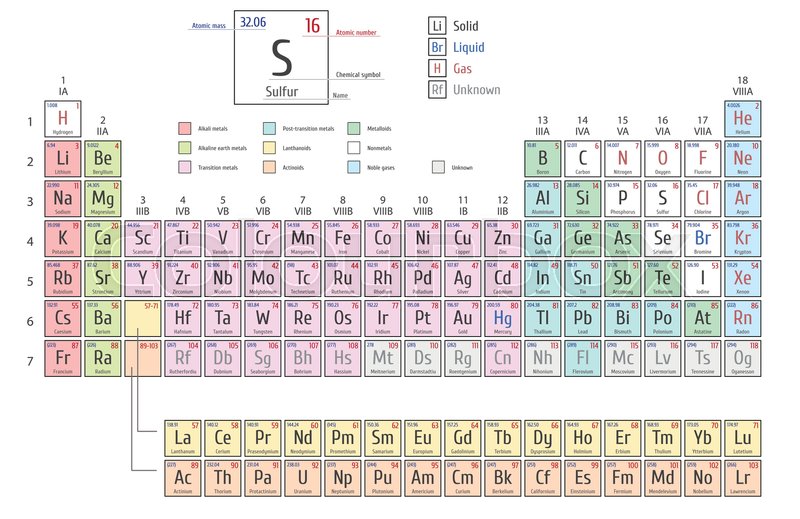
Se Periodic Table
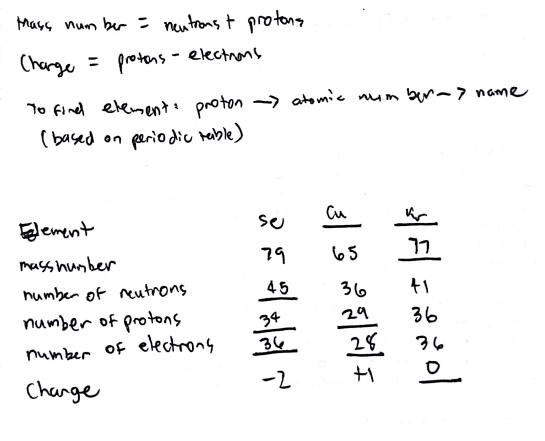
Se Atomic Number Vs

Origin of selenium
- Greek selēnēmoon (fromselaslight, brightness) –ium
From American Heritage Dictionary of the English Language, 5th Edition
- A New Latin word derived by Swedishchemist Berzelius in 1818, from Ancient Greek Σελήνη (selēnē, 'moon').
From Wiktionary
The atomic mass of an element is the average mass of the atoms of an element measured in atomic mass unit (amu, also known as daltons, D). The atomic mass is a weighted average of all of the isotopes of that element, in which the mass of each isotope is multiplied by the abundance of that particular isotope. (Atomic mass is also referred to as atomic weight, but the term 'mass' is more accurate.)
Se Atomic Number Calculator
For instance, it can be determined experimentally that neon consists of three isotopes: neon-20 (with 10 protons and 10 neutrons in its nucleus) with a mass of 19.992 amu and an abundance of 90.48%, neon-21 (with 10 protons and 11 neutrons) with a mass of 20.994 amu and an abundance of 0.27%, and neon-22 (with 10 protons and 12 neutrons) with a mass of 21.991 amu and an abundance of 9.25%. The average atomic mass of neon is thus:

| 0.9048 | × | 19.992 amu | = | 18.09 amu |
| 0.0027 | × | 20.994 amu | = | 0.057 amu |
| 0.0925 | × | 21.991 amu | = | 2.03 amu |
| 20.18 amu |
The atomic mass is useful in chemistry when it is paired with the mole concept: the atomic mass of an element, measured in amu, is the same as the mass in grams of one mole of an element. Thus, since the atomic mass of iron is 55.847 amu, one mole of iron atoms would weigh 55.847 grams. The same concept can be extended to ionic compounds and molecules. One formula unit of sodium chloride (NaCl) would weigh 58.44 amu (22.98977 amu for Na + 35.453 amu for Cl), so a mole of sodium chloride would weigh 58.44 grams. One molecule of water (H2O) would weigh 18.02 amu (2×1.00797 amu for H + 15.9994 amu for O), and a mole of water molecules would weigh 18.02 grams.
Se Element Charge
The original periodic table of the elements published by Dimitri Mendeleev in 1869 arranged the elements that were known at the time in order of increasing atomic weight, since this was prior to the discovery of the nucleus and the interior structure of the atom. The modern periodic table is arranged in order of increasing atomic number instead.